You have heard the term reverse osmosis thrown around in conversations about water quality. Perhaps you have seen it mentioned on bottles of premium water, or you have noticed it as a feature of high-end home filtration systems. You know it is supposed to be good, that it produces exceptionally pure water, but you are not entirely sure what it actually means or how it works. The phrase itself sounds technical and complex, something best left to scientists and engineers.
The reality is far simpler and far more fascinating. Reverse osmosis is a remarkably elegant solution to one of the most fundamental challenges of modern life: how to obtain pure, safe drinking water. It is a process that harnesses the basic laws of physics to separate contaminants from water at the molecular level, producing water that is consistently cleaner than almost any other filtration method can achieve. Understanding how it works is the first step toward appreciating why it has become the gold standard for water purification in homes, hospitals, and industries around the world.
The Problem with Ordinary Water
Before we can understand reverse osmosis, we need to understand the problem it solves. The water that flows from your tap is not pure. Even after treatment at the municipal water plant, it contains a host of dissolved substances. Minerals like calcium and magnesium, which cause hard water, are present in varying concentrations. Chlorine, added to kill bacteria, remains in the water as it travels through your pipes. Heavy metals like lead and copper can leach from ageing plumbing. Pesticides, herbicides, and industrial chemicals find their way into water sources through agricultural runoff and industrial discharge.
These contaminants are dissolved at the molecular level. They are invisible to the naked eye, and they cannot be removed by simple mechanical filtration like a sieve or a mesh. A filter that removes these substances must be capable of separating individual molecules from water, a task that requires something far more sophisticated than a simple screen.
This is where reverse osmosis excels. It is a filtration method that operates at the molecular level, removing the vast majority of dissolved substances and producing water of exceptional purity.
The Principle of Osmosis
To understand reverse osmosis, we must first understand osmosis. Osmosis is a natural process that occurs throughout the living world. It is the movement of water molecules through a semi-permeable membrane from an area of lower concentration of dissolved substances to an area of higher concentration.
Imagine two compartments separated by a semi-permeable membrane. This membrane has tiny pores that are large enough for water molecules to pass through but too small for larger molecules like salt, sugar, or contaminants to pass through. One compartment contains pure water, and the other contains water with a high concentration of dissolved salt.
Nature seeks balance. Water molecules will naturally move from the pure water side to the saltwater side, attempting to dilute the saltwater and equalise the concentration on both sides of the membrane. The water moves from the side with fewer contaminants to the side with more contaminants, a process driven by osmotic pressure.
This is how plants draw water from the soil into their roots, and how our bodies regulate fluid balance. It is a passive process that requires no energy input.
The Principle of Reverse Osmosis
Reverse osmosis is, as the name suggests, the reversal of this natural process. Instead of allowing water to move naturally from an area of low contaminant concentration to an area of high contaminant concentration, we apply pressure to the contaminated water, forcing water molecules through the membrane in the opposite direction.
In a reverse osmosis system, the contaminated water is pressurised and forced against a semi-permeable membrane. The pressure overcomes the natural osmotic pressure, and water molecules are pushed through the microscopic pores in the membrane. The dissolved contaminants are too large to pass through the pores and are left behind, carried away as waste water.
The water that passes through the membrane is remarkably pure, free from the vast majority of dissolved solids, heavy metals, chemicals, and other contaminants. It is the application of pressure that reverses the natural flow of osmosis, hence the name reverse osmosis.
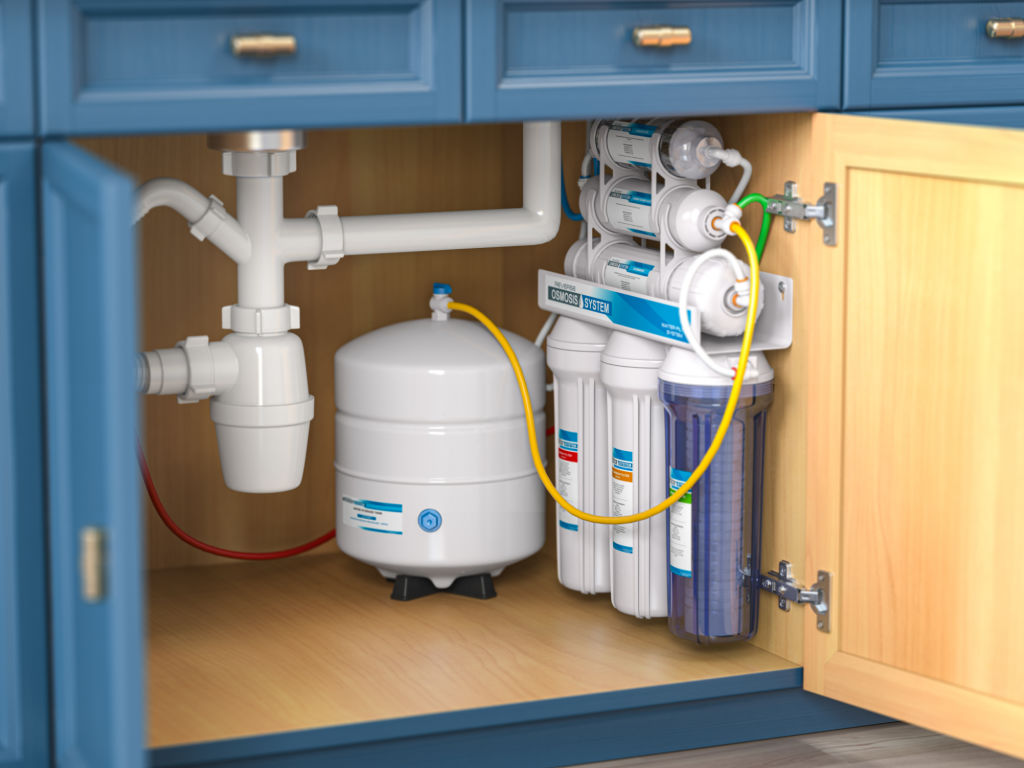
The Multi-Stage Filtration Process
A reverse osmosis system is more than just the membrane. It is a multi-stage filtration system that combines several different technologies to achieve the best possible water quality.
Stage One: The Sediment Pre-Filter
The first stage of a reverse osmosis system is a sediment pre-filter. This is a mechanical filter that removes suspended particles from the water before it reaches the RO membrane. These particles include dirt, rust, sand, and other debris that may be present in your water supply.
The sediment filter protects the RO membrane by preventing these particles from clogging or damaging it. It also improves the effectiveness of subsequent filtration stages by ensuring that the water entering them is free from particulate matter.
Stage Two: The Carbon Pre-Filter
The second stage is an activated carbon filter. This filter removes chlorine and volatile organic compounds that can damage the RO membrane. Chlorine is added to municipal water as a disinfectant, but it can oxidise and degrade the RO membrane, shortening its lifespan and reducing its effectiveness.
The carbon filter also improves the taste and odour of the water by removing the chemical compounds that cause unpleasant flavours and smells. It is an essential component of the system, protecting both the membrane and your enjoyment of the water.
Stage Three: The RO Membrane
The third stage is the heart of the system, the reverse osmosis membrane. This is the semi-permeable membrane that physically separates contaminants from water at the molecular level. The membrane is typically made of a thin film composite material, with microscopic pores that allow water molecules to pass through while blocking larger molecules.
As the pressurised water is forced against the membrane, water molecules pass through the pores, while dissolved salts, heavy metals, and other contaminants are rejected and carried away in the waste water stream.
Stage Four: The Post-Carbon Filter
The fourth stage is the post-carbon filter. This is an additional activated carbon filter that polishes the water after it has passed through the RO membrane. It removes any remaining tastes or odours, ensuring that the water is fresh, clean, and pleasant to drink.
The post-carbon filter provides a final layer of quality assurance, producing water that is not only pure but also delicious.
Stage Five: The Storage Tank
Most reverse osmosis systems include a storage tank that holds the purified water until it is needed. This is because the RO process is relatively slow, producing water at a rate of perhaps one to two litres per hour. The storage tank ensures that you have a ready supply of pure water on demand, without waiting for the system to produce it.
The Waste Water
The reverse osmosis process produces waste water that carries away the contaminants that have been removed from the drinking water. The amount of waste water varies depending on the system, but modern systems are far more efficient than older models. Some systems incorporate a permeate pump that reduces waste water by up to eighty percent.
The waste water is not environmentally harmful. It contains the concentrated minerals and contaminants that were removed from the drinking water. Many homeowners use this water for watering plants or other non-potable purposes.
What Reverse Osmosis Removes
Reverse osmosis is remarkably effective at removing a wide range of contaminants from water. The semi-permeable membrane is designed to reject molecules that are larger than water molecules, which includes the vast majority of dissolved solids and contaminants.
Dissolved Minerals
Reverse osmosis removes calcium, magnesium, sodium, and other dissolved minerals, producing water with a very low Total Dissolved Solids reading. This addresses hard water issues and prevents limescale.
Heavy Metals
The membrane effectively removes heavy metals such as lead, mercury, arsenic, and copper. These metals can leach from plumbing or be present in water sources due to industrial pollution.
Chemical Contaminants
Reverse osmosis removes many chemical contaminants, including pesticides, herbicides, and volatile organic compounds. These substances can be present in water sources due to agricultural runoff or industrial discharge.
Microorganisms
While reverse osmosis is not primarily a disinfection method, it does remove microorganisms such as bacteria, viruses, and cysts. The microscopic pores in the membrane are too small for these organisms to pass through.
What Reverse Osmosis Does Not Remove
Reverse osmosis does not remove gases such as chlorine or volatile organic compounds that are in a gaseous state. This is why the carbon pre-filter is essential, as it removes these substances before they reach the membrane.
Reverse osmosis also removes beneficial minerals from water. This is a topic of debate, with some arguing that the health benefits of these minerals are significant and others maintaining that dietary sources provide more than enough. Many systems now include a remineralisation filter that adds back a small amount of beneficial minerals.
The Difference Between RO and Distilled Water
Reverse osmosis and distillation are often compared, as both produce highly purified water. However, they work through very different processes.
Distillation involves boiling water and collecting the steam as it condenses. The boiling process kills bacteria and removes most contaminants, as the dissolved solids remain in the boiling chamber. Distilled water is extremely pure, but the process is energy-intensive and slow.
Reverse osmosis is a physical filtration process that requires no heating. It is more energy-efficient and produces water more quickly, making it more practical for household use. Both methods produce water of high purity, but reverse osmosis is generally considered more practical and cost-effective for home use.
Is Reverse Osmosis Water Safe to Drink?
There is a common misconception that reverse osmosis water is unhealthy because it lacks minerals. This concern is largely unfounded. The minerals present in water contribute very little to your daily mineral intake, with dietary sources such as food providing the vast majority.
The World Health Organisation has noted that some minerals in water are beneficial, but it does not recommend against drinking RO water. In fact, many health organisations consider RO water to be safe and healthy. For those who are concerned, remineralisation filters are available that add back a controlled amount of beneficial minerals.
Reverse osmosis water is also an excellent choice for cooking. It allows the natural flavours of food to shine through, and it prevents the build-up of limescale in kettles, coffee machines, and other appliances.
Installation and Maintenance
Installing a reverse osmosis system is typically straightforward. Most under-sink systems are designed for DIY installation, with clear instructions and all necessary components included. However, professional installation is recommended for those who are not comfortable with plumbing.
The system connects to the cold water supply under your kitchen sink, and a dedicated tap is installed on the sink or worktop. The storage tank fits neatly under the sink, making the system unobtrusive and convenient.
Maintenance is minimal. The pre-filters and post-filter should be replaced every six to twelve months, depending on usage and water quality. The RO membrane itself lasts two to three years. Replacement filters are inexpensive and widely available.
In Conclusion
A reverse osmosis water filter is a remarkably effective solution for producing pure, great-tasting drinking water at home. It uses the principles of osmosis and pressure to remove up to ninety-nine percent of dissolved contaminants, including heavy metals, chemicals, and minerals.
Understanding how it works demystifies the technology and helps you appreciate the value it provides. From the multi-stage filtration process to the delicate semi-permeable membrane, every component plays a vital role in delivering water of exceptional purity.
Whether you are concerned about the quality of your tap water, tired of buying bottled water, or simply want the best-tasting water for cooking and drinking, a reverse osmosis system is a wise investment. It is affordable, easy to maintain, and delivers results that are consistently superior to other filtration methods.
Looking for some of the best Reverse Osmosis Membranes and Housing Kits in UK?